Extended Medical Listings

Institute of Clinical Orthopedics and Neurosciences

Essential Information

Street Address 1180 N. Indian Canyon Dr.
Ste. 201 and 214 W
Palm Springs, CA 92262
Phone760-416-4511
Website URL www.DesertMedCtr.com

Improving Quality of Life

By Erika Z. Byrd

From our first steps, we long to be independent, mobile, on the go. In fact, we may not think much about our mobility until something threatens to limit it. Age, arthritis, injuries, all can take their toll, affecting range of motion and interfering with daily tasks. At Desert Regional Medical Center, an entire team of specialists is passionately dedicated to helping people maintain or regain their mobility. It’s no wonder the acronym for this impressive team is ICON. Standing for ‘Institute of Clinical Orthopedics and Neurosciences,’ this team of physicians and allied health professionals represents the key to an enhanced quality of life for many people. The team includes board-certified, fellowshiptrained orthopedic surgeons, neurosurgeons and neurologists, along with physical therapists and a host of medical support personnel.

COMPREHENSIVE MOVEMENT DISORDERS PROGRAM

One of the newest members of ICON is M. Georgeta Varga, M.D., who joined the team in 2009 to direct and develop the comprehensive Movement Disorders Program. Dr. Varga is a board-certified neurologist with a subspecialty in movement disorders, completed after two years of fellowship training at the Cleveland Clinic in Ohio. She and her team work with patients who suffer from Parkinson’s, dystonia and essential tremor, as well as disorders such as ataxia and restless leg syndrome.

“The problem I have seen in Southern California is that people get bits and pieces of treatment from various places and then they lose the continuity of medical care. That’s why we are developing a comprehensive program to help these patients every step of the way and to follow them for many years,” states Dr. Varga.

The cornerstone of any treatment plan is proper diagnosis. “Our entire team evaluates each patient to determine the diagnosis. Then we treat them with medication, rehabilitation, sometimes Botox injections and possibly with surgery,” explains Dr. Varga who notes that surgery is not a first-line treatment; it is indicated in patients for whom medication fails to maintain effectiveness.

This past May, Dr. Varga, participated in the first deep brain stimulation procedure performed at Desert Regional Medical Center. The patient, a 79-year-old male, has been suffering with Parkinson’s for 20 years. Dr. Varga’s expertise involves screening patients for surgery, performing intraoperative brain mapping and postoperative programming and management. Deep brain stimulation surgery has been shown to significantly decrease tremors and rigidity and typically, decrease need for medication in patients with advanced Parkinson’s and other movement disorders. The procedure involves implanting a small electrode in the specific area of the brain which is causing the tremors. DBS has been FDA approved for treating essential tremor since 1997, for Parkinson’s since 2002, and for dystonia since 2003.

Another integral element of ICON’s Movement Disorders Program is rehabilitation — not just general physical therapy, but specific exercises designed to help people challenged with movement disorders like Parkinson’s.

Six years ago, Ted Kristian, now 72, was diagnosed with Parkinson’s. He moved to Cathedral City from Los Angeles a year ago to “retire and enjoy the good life.” Within a few months, he was referred to Dr. Varga. In addition to altering his medication, she insisted he go through rehabilitation.

“I’m not a great lover of rehabilitative therapy, but it’s my life, so I complied and it really helped,” says Kristian. “They taught me how to relearn things like buttoning my shirt and getting in and out of bed. Also, other activities requiring hand/eye coordination such as legible handwriting.

“Dr. Varga is a walking encyclopedia on Parkinson’s. She taught me that the depression I experience is a part of my disease and can be treated as well. I am happy to be in her hands. Even though Parkinson’s is a progressive disease, I got to Dr. Varga in time. She is helping me to slow down its progression” states Kristian. “What I didn’t have last year at this time was hope,” he adds. “I have hope now about living a normal life, not sitting (around) and living a nonambulatory life. I can look forward to a happier future.”

MANY BENEFITS OF MINIMALLY INVASIVE ANTERIOR HIP REPLACEMENT

Another procedure available at ICON to help people enjoy a high quality of life is minimally invasive anterior hip replacement. Orthopedic surgeon Louis Stabile, M.D. brought this technique to the desert several years ago. He has performed more than 140 anterior hip replacements at Desert Regional Medical Center since 2006.

“This is a passion of mine. I love doing this procedure. It has a low complication rate and faster recovery as the anterior approach goes between muscles, so we don’t cut any muscles or tendons,” states Dr. Stabile. “It is a more meticulous surgery. No matter how many years you have been doing hip replacements, this is thinking-outside-the-box surgery. It’s a different way of performing hip replacement.”

The anterior total hip surgery requires a high-tech operating table, which allows the surgeon to position the patient’s leg to allow access to the hip from the front. “The patient is able to lie face up, which is more natural because it better approximates the standing position,” states Dr. Stabile. A portable X-ray machine also is used operatively to guide insertion of the implant.

Dr. Stabile has also performed hip revision surgeries using this technique. Appropriate for nearly any patient type, he recently did an anterior hip replacement on a 6-foot - 4-inch, 330-pound man. Two other ICON surgeons — David Duffner, M.D., M.B.A., Medical Director of the Spine Program, and Lawrence Serif, D.O. — also are now performing anterior hip replacements at Desert Regional Medical Center.

The benefits of the minimally invasive anterior hip replacement include a smaller incision of about 4 inches, less tissue trauma, and a faster recovery time. No sutures need to be removed, as they are dissolvable and surgeons are able to close the opening with Dermabond®. Patients are typically walking shortly after surgery, shower the next day, and start getting back to life. After all, that’s what it’s all about.

Institute of Clinical Orthopedics and Neurosciences
1180 N. Indian Canyon Dr. Ste. 201 and 214 W.
Palm Springs, CA 92262
1-760-416-4511
www.DesertMedCtr.com

Is this your company? Login to edit this listing »

Additional Information

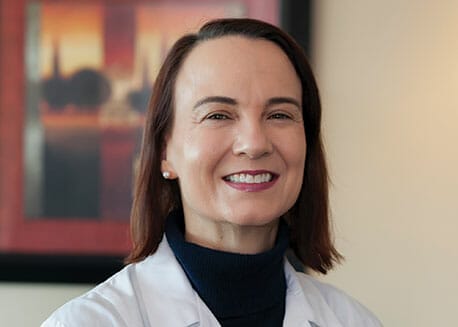
M. Georgeta Varga, M.D. recently to direct in the first DBS surgery at Desert Regional Medical Center.

M. Georgeta Varga, M.D. recently to direct in the first DBS surgery at Desert Regional Medical Center.

Dr. Louis Stabile has performed more than 140 minimally invasive hip replacements.

Dr. Louis Stabile has performed more than 140 minimally invasive hip replacements.